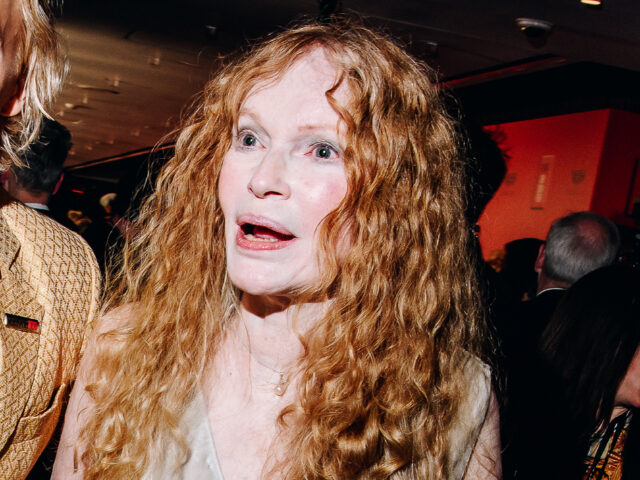
Actress Mia Farrow ignited a firestorm with a now-deleted social media post implying that former President Donald Trump may have orchestrated the 2024 White House Correspondents’ Dinner (WHCD) shooting to manipulate public approval ratings. The claim, widely condemned as dangerous and baseless, reflects a deeper erosion of trust in political narratives—and the growing influence of celebrity voices in shaping them.
In an environment where misinformation spreads faster than facts, Farrow’s suggestion didn’t just circulate—it resonated. Despite immediate pushback from law enforcement, journalists, and political figures across the spectrum, the theory gained traction in fringe circles and fueled broader debates about the boundaries of public speculation.
This article examines the origins of Farrow’s claim, the factual timeline of the WHCD incident, why such theories gain momentum, and the consequences of blurring the line between political critique and conspiracy.
The Origins of the Claim
Mia Farrow, known for her long-standing activism and sharp political commentary, posted a cryptic message on X (formerly Twitter) shortly after news broke of the shooting at the Washington Hilton during the WHCD. The post read: “Convenient timing. Suspicious lack of clear footage. Would not put it past him to stage this for sympathy and ratings.”
Though she didn’t name Trump directly, the context made the target unmistakable. The post was quickly flagged, limited by platform moderators, and later deleted by Farrow herself. She offered no public apology or clarification.
Farrow has a history of making bold political statements—from advocating for human rights in Darfur to criticizing Trump during his presidency. But this accusation crossed a threshold. Unlike past critiques rooted in policy disagreement, this one alleged deliberate, criminal orchestration of violence—a charge with real-world consequences.
What Actually Happened at the WHCD?
On the evening of the White House Correspondents’ Dinner, a lone gunman opened fire near the press tent outside the Washington Hilton. The suspect, later identified as 34-year-old Ethan Hale, was subdued by Secret Service and Capitol Police. No major political figures were injured, though two journalists sustained minor wounds from shrapnel and one security officer was hospitalized with a gunshot wound to the leg.
The FBI confirmed within 24 hours that Hale acted alone, had no known ties to extremist organizations, and was motivated by anti-establishment rhetoric. Digital forensics linked him to multiple online posts criticizing both political parties, though he had expressed particular hostility toward Trump in private chat logs.
Security footage, witness statements, and ballistic analysis all support the official account. There is no credible evidence of staged elements, coordinated actors, or planted evidence.
Despite this, speculation flourished online—fueled, in part, by high-profile figures like Farrow suggesting otherwise.
Why Do Conspiracy Theories Like This Gain Traction?
Conspiracy theories thrive in moments of shock, ambiguity, and political polarization. The WHCD shooting happened during a tense election cycle, with Trump leading in national polls and media scrutiny at a peak. That context created fertile ground for narrative manipulation.
Several psychological and digital factors explain why Farrow’s claim spread:
- Cognitive bias: People are more likely to believe information that aligns with pre-existing beliefs. For critics of Trump, the idea that he’d exploit violence for gain isn’t far-fetched—even if evidence is absent.
- Celebrity amplification: When a well-known figure makes a claim, it gains immediate attention, regardless of merit. Farrow’s platform ensured the theory wasn’t dismissed as fringe.
- Information vacuum: In the first hours after a crisis, details are scarce. That gap is often filled by speculation, memes, and unverified claims—especially on decentralized platforms like Telegram and Rumble.
- Media feedback loop: Outlets covering the reaction to Farrow’s tweet (rather than the facts of the shooting) inadvertently amplified the conspiracy.
It’s not the first time a celebrity has fueled a dangerous theory. Rosie O’Donnell once claimed 9/11 was an inside job. Kanye West suggested slavery was a choice. These moments reveal a troubling trend: moral authority in activism does not equate to factual rigor.
The Real Danger of Staged Violence Accusations
Accusing a public figure of staging violence—even rhetorically—has tangible consequences.
First, it undermines public trust in law enforcement and judicial processes. When a credible investigation is dismissed as a cover-up, future findings risk being ignored regardless of evidence.
Second, it endangers public safety. The WHCD shooting already led to increased threats against journalists and event staff. Adding claims of fabrication puts more pressure on already strained security infrastructure.
Third, it normalizes disinformation. Once a theory like this enters the discourse, it’s nearly impossible to erase. Even if the originator deletes the post, screenshots live on in forums and encrypted groups.
Experts warn that such narratives erode democratic resilience. “When we start treating every tragedy as a potential psyop, we lose the ability to respond rationally to real threats,” said Dr. Lena Cho, a disinformation researcher at Georgetown University. “It creates paralysis through paranoia.”
Mia Farrow’s Pattern of Political Provocation
Farrow’s WHCD comment isn’t an isolated incident. Over the past decade, she’s made repeated incendiary claims about political figures:
- In 2020, she tweeted that Trump had “engineered” the pandemic to delay elections.
- In 2022, she linked the Uvalde school shooting to a “false flag” operation by federal agents.
- She has consistently promoted unverified claims about voter fraud and election rigging—though only when Democrats benefit.
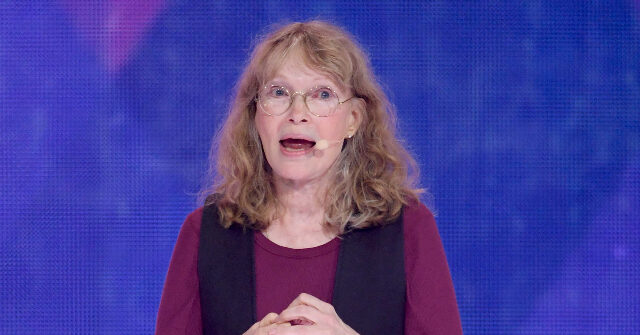
While free speech protects such expressions, their impact extends beyond personal opinion. Farrow has nearly 2 million followers. Her words don’t float in a vacuum.
Critics argue that her celebrity status grants her immunity from consequences that ordinary users face for spreading disinformation. “She’s not some random troll,” said media analyst Dan Pierce. “She’s a veteran public figure with credibility in humanitarian work. That makes her dangerous when she veers into conspiracy.”
How the Media Should Handle Celebrity Conspiracy Claims
Newsrooms face a dilemma: ignore celebrity conspiracy posts and risk appearing complicit, or cover them and risk amplification.
The responsible approach involves three steps:
- Immediate fact-checking: When a claim like Farrow’s emerges, outlets should publish rapid rebuttals with verified data—not just opinion.
- Context over repetition: Instead of quoting the claim verbatim, frame it within a broader discussion of misinformation trends.
- Hold platforms accountable: Social media companies must enforce policies consistently. High-profile users shouldn’t be exempt from moderation.
Some outlets failed this test. Several major news sites ran headlines like “Mia Farrow Slams Trump in Shocking WHCD Claim” without emphasizing the lack of evidence or the dangers of the allegation. That kind of coverage rewards outrage with attention.
The Broader Cost of Political Cynicism
Farrow’s suggestion that Trump staged the shooting reflects a deeper cultural malaise: the assumption that all political actions are performative, all tragedies exploitable, and all leaders irredeemably corrupt.
This cynicism doesn’t just distort reality—it disables action. If every event is seen as a plot, then real issues—gun violence, mental health, press freedom—get lost in the noise.
Consider this: the WHCD shooting reignited debates about journalist safety and the militarization of public events. But those discussions were quickly derailed by conspiracy chatter.
When we treat every crisis as a potential hoax, we stop asking how to prevent the next one—and start asking who benefited.
What Should Be Done?
The fallout from Farrow’s claim isn’t just about one tweet. It’s about setting norms for public discourse.
Here’s what needs to happen:
- Celebrities must recognize their influence: With platform comes responsibility. Advocacy doesn’t excuse recklessness.
- Media must resist sensationalism: Cover reactions, but center facts, not outrage.
- Platforms must enforce policies uniformly: No exceptions for famous accounts.
- Audiences must practice media literacy: Ask: Who benefits from this narrative? What evidence exists? Is this provable?
Democracy depends on shared reality. When trusted voices erode that foundation, even unintentionally, the cost is paid in public trust, policy progress, and sometimes, lives.
Mia Farrow’s comment about the WHCD shooting may have been deleted. But its ripple effects remain. The real test isn’t whether we can debunk a single conspiracy—it’s whether we can rebuild a culture where truth isn’t optional.
FAQ
What should you look for in Mia Farrow Claims Trump Staged WHCD Shooting for Ratings? Focus on relevance, practical value, and how well the solution matches real user intent.
Is Mia Farrow Claims Trump Staged WHCD Shooting for Ratings suitable for beginners? That depends on the workflow, but a clear step-by-step approach usually makes it easier to start.
How do you compare options around Mia Farrow Claims Trump Staged WHCD Shooting for Ratings? Compare features, trust signals, limitations, pricing, and ease of implementation.
What mistakes should you avoid? Avoid generic choices, weak validation, and decisions based only on marketing claims.
What is the next best step? Shortlist the most relevant options, validate them quickly, and refine from real-world results.