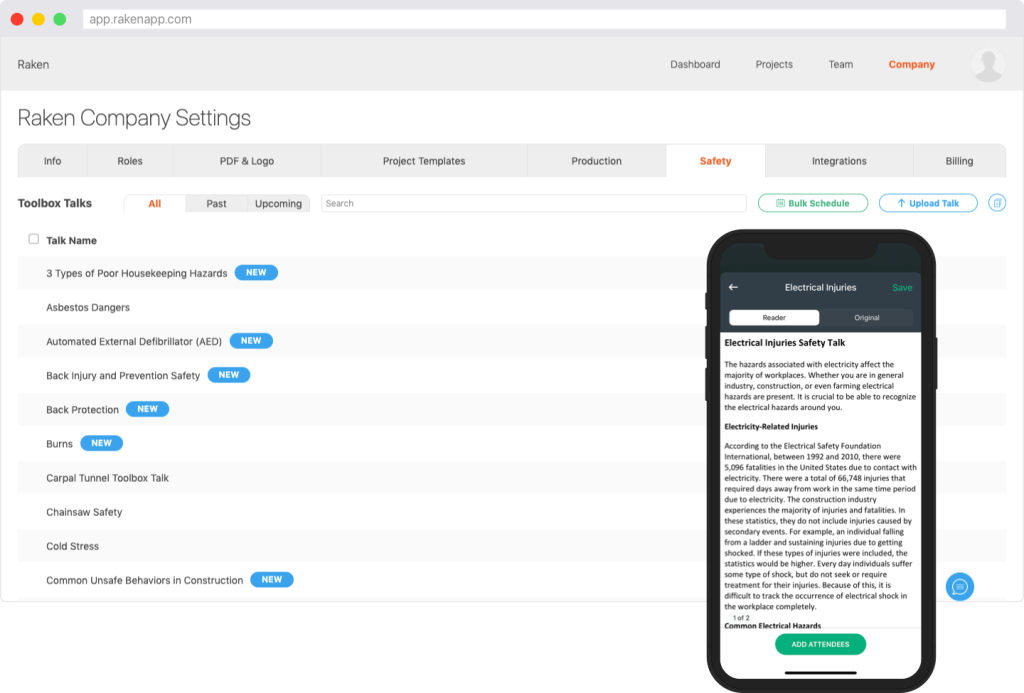
Most safety meetings are forgettable. Workers zone out. Supervisors read from memory. Topics are recycled or too generic to matter. The result? Low engagement, spotty compliance, and preventable incidents.
The problem isn’t the intent—it’s the execution. Effective toolbox talks need to be specific, relevant, and easy to deliver. That’s where a free toolbox talk topics PDF becomes a game-changer.
These aren’t just handouts. They’re structured, actionable guides that turn 10-minute conversations into real behavior change. Whether you're managing a construction crew, warehouse team, or utility field staff, having ready-made, downloadable PDFs saves hours of prep and ensures consistency across shifts.
This guide delivers exactly that: a curated collection of free, high-impact toolbox talk topics in PDF format—ready to download, print, and use tomorrow.
What Makes a Toolbox Talk Actually Work?
Not all safety talks are created equal. The difference between a routine checklist and a meaningful discussion comes down to structure, relevance, and clarity.
A strong toolbox talk includes: - A clear safety focus (e.g., ladder safety, not just “general safety”) - Real-world scenarios workers recognize - Discussion prompts, not just instructions - Space for sign-offs and notes - Visuals or simple diagrams when helpful
Many free PDFs miss the mark—packed with jargon, missing engagement cues, or too broad to be useful. The best ones follow a simple formula: Problem → Risk → Prevention → Action.
- For example, a talk on “working at height” should:
- Describe a recent near-miss
- Explain fall risks on site
- Review harness checks and anchor points
- Ask: “What would you do if your harness felt loose?”
This format keeps workers involved and accountable.
Where to Find Free Toolbox Talk Topics PDFs (Legit Sources)
Not all free resources are safe or reliable. Some contain outdated OSHA references, poor formatting, or even malware. Stick to these trusted sources for high-quality, downloadable PDFs:
1. OSHA.gov (U.S. Department of Labor) The gold standard. OSHA offers dozens of printable safety talks in PDF, covering everything from trenching to noise exposure. Pros: Authoritative, compliant, free. Limitations: Can be text-heavy; requires customization for your site.
2. SafetyOne (safetyone.com) Provides industry-specific PDFs for construction, electrical, and manufacturing. Their toolbox talk templates include discussion questions and attendance sheets. Bonus: Mobile-friendly downloads you can pull up on-site.
3. HSE UK (hse.gov.uk)

While UK-based, their materials are globally applicable. Clear, visual, and focused on behavioral safety. Best for: Teams wanting concise, image-supported talks.
4. Creative Safety Supply (creativesafetysupply.com) Offers themed safety bundles—like “10 Fall Protection Talks” or “Lockout/Tagout Series.” Key feature: Many include QR codes linking to training videos.
5. Trade Associations (e.g., AGC, NECA) Groups like the Associated General Contractors or National Electrical Contractors Association offer members-only PDF packs. Even non-members can access sample talks.
Pro tip: Pair any free PDF with a 30-second site-specific example (“Remember last week’s near-miss by the loading dock?”) to boost relevance.
50+ Free Toolbox Talk Topics You Can Use Today
Here’s a practical list of the most impactful, commonly needed topics—all available in free PDF format from the sources above.
General Safety
- Personal Protective Equipment (PPE) basics
- Slips, trips, and falls
- Housekeeping best practices
- Emergency evacuation procedures
- Fire extinguisher use
Construction & Field Work
- Working at heights
- Scaffold safety
- Ladder inspection and use
- Excavation and trenching
- Crane and hoist operations
Electrical Safety
- Lockout/Tagout (LOTO) procedures
- Working near power lines
- Portable tool grounding
- Overhead hazard awareness
- Arc flash prevention
Equipment & Machinery
- Forklift safety
- Pressure washer hazards
- Nail gun safety
- Chainsaw operation
- Equipment pre-start checks
Environmental & Health
- Heat stress prevention
- Cold weather work
- Hazardous material handling
- Indoor air quality
- Mold awareness
Behavioral & Operational
- Fatigue management
- Distraction-free work zones
- Stop Work Authority (SWA) culture
- Near-miss reporting
- Job hazard analysis (JHA) refresher
Each of these topics can be found in at least one free, printable PDF. Many include bilingual versions (English/Spanish), which is critical for diverse crews.
How to Customize a Free PDF for Your Team
Downloading a PDF is just the start. To make it stick, tailor it.
Step 1: Add site-specific details Insert your company logo, location, and supervisor name. Replace generic images with photos from your worksite if possible.
Step 2: Insert real examples Instead of “a worker fell from a ladder,” say “last month, Carlos almost fell from the ladder on the west wall—here’s what we learned.”
Step 3: Shorten or split long talks If a PDF covers “All PPE,” break it into three 10-minute sessions: head protection, eye protection, and respiratory gear.
Step 4: Add local rules Mention your site’s specific LOTO procedure or permit system. Workers respond better to rules they actually follow.

Step 5: Turn it into a checklist Convert key points into a quick pre-job reminder card. Example: - ✅ Hard hat secured? - ✅ Gloves worn? - ✅ Harness inspected?
Even minor tweaks increase retention by up to 40%, according to NIOSH field studies.
Common Mistakes When Using Free Toolbox Talk PDFs
Free doesn’t mean flawless. Avoid these pitfalls:
❌ Using outdated OSHA standards Some PDFs reference pre-2017 fall protection rules. Always verify dates and regulatory alignment.
❌ Skipping the sign-off sheet No record = no proof of training. Never use a talk without an attendance log.
❌ Reading verbatim Workers tune out if you’re just reciting text. Use the PDF as a guide, not a script.
❌ Repeating the same topics monthly Rotate content. Use seasonal themes—heat stress in summer, ice traction in winter.
❌ Assuming one size fits all A talk on forklift safety means nothing to roofers. Match topics to crew roles.
The best teams audit their talk library quarterly, retiring stale topics and adding new risks.
How to Organize Your Toolbox Talk Library (PDF Management)
A disorganized folder of 50+ PDFs is useless. Structure it for speed and consistency.
Create a folder system like this:
/Toolbox Talks /By Topic /Fall Protection /Electrical Safety /PPE /By Month /January 2024 /February 2024 /By Crew Type /Carpenters /Electricians /HVAC
| Add a master spreadsheet: | |||||
|---|---|---|---|---|---|
| ------ | ------- | ----------- | ------ | ---------- | --------------------- |
| 3/5 | Ladder Safety | J. Rivera | Roofing | 12 min | Yes |
Use cloud storage (Google Drive, Dropbox) so supervisors can access talks on mobile—even offline.
Turn Free PDFs Into a Safety Culture Habit
The real value isn’t in the document—it’s in the routine.
- Top-performing sites do three things differently:
- Schedule talks weekly, not just after incidents.
- Rotate presenters—let experienced workers lead occasionally.
- Link talks to permits or JHAs—e.g., “Before this roof job, we reviewed the fall protection talk from March.”
When workers see safety as part of the workflow—not a box to check—accidents drop. One contractor reported a 60% reduction in recordables after implementing structured PDF-based talks across 18 crews.
Get Started Tomorrow: Your 3-Step Action Plan
- Download 3–5 free PDFs from OSHA or SafetyOne—focus on your biggest current risks.
- Customize one with your site details and a real example.
- Run your first talk—keep it under 12 minutes, ask two open questions, and collect signatures.
Do this consistently, and you’re not just checking compliance boxes. You’re building a culture where safety is spoken, not siloed.
Frequently Asked Questions
Where can I download free toolbox talk topics in PDF format? OSHA.gov, SafetyOne, HSE UK, and Creative Safety Supply offer free, printable PDFs with no sign-up required.
Are free toolbox talk PDFs OSHA compliant? Many are, but always verify content against current OSHA standards—especially for fall protection, LOTO, and respiratory rules.
How often should toolbox talks be conducted? Weekly is ideal. At minimum, once per month or after any safety incident or near-miss.
Can I edit a free PDF toolbox talk? Yes—customize it with your company name, site photos, and specific procedures to increase relevance and engagement.
Do toolbox talk PDFs need attendance sheets? Absolutely. Always include a sign-off page. It proves training occurred and supports compliance audits.
Should every crew get the same talk? No. Tailor topics to the crew’s work—e.g., electrical teams get LOTO; drivers get distracted driving talks.
Are there bilingual toolbox talk PDFs available? Yes—many free resources offer English/Spanish versions, especially from OSHA and SafetyOne.
FAQ
What should you look for in Free Toolbox Talk Topics PDF – 50+ Ready-to-Use Templates? Focus on relevance, practical value, and how well the solution matches real user intent.
Is Free Toolbox Talk Topics PDF – 50+ Ready-to-Use Templates suitable for beginners? That depends on the workflow, but a clear step-by-step approach usually makes it easier to start.
How do you compare options around Free Toolbox Talk Topics PDF – 50+ Ready-to-Use Templates? Compare features, trust signals, limitations, pricing, and ease of implementation.
What mistakes should you avoid? Avoid generic choices, weak validation, and decisions based only on marketing claims.
What is the next best step? Shortlist the most relevant options, validate them quickly, and refine from real-world results.